
Distributed Energy
Resource Aggregations
Learn how distributed energy resources can work together through an aggregator to participate in ISO-New England wholesale electricity markets, and understand the associated requirements for our customers.

About DER aggregations
Understand DERs, aggregations, and FERC Order No. 2222.

Information for customers
Review benefits, eligibility, technical requirements, and steps.

Information for aggregators
See requirements before submitting enrollments.

Resources and FAQs
Find answers, program links, maps, and terms.
About DER aggregations
Understand distributed energy resources, aggregation, and market participation.
What is a distributed energy resource aggregation?
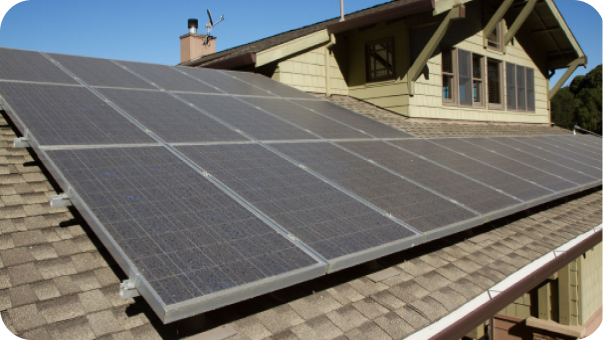
A distributed energy resource is a distribution-connected resource such as rooftop solar, energy storage, demand response, managed electric vehicle charging, smart thermostats, or thermal energy storage.
Aggregation combines multiple DERs into one group that can participate in the wholesale market through an aggregator.
FERC Order No. 2222 enables Distributed Energy Resources (DERs) to participate in regional wholesale electricity markets, such as those run by ISO-New England. Smaller resources can work together as a single aggregation. Wholesale electricity markets were built mainly for large power plants. FERC Order No. 2222 gives smaller DERs a way to work together through an Aggregator to take part in these markets.
Information for customers
Participation can support grid reliability, make use of existing energy resources, and may provide compensation opportunities.

NOTE: Please work with your aggregator to understand any compensation you may receive and if participation in an aggregation could impact your current rate.
Participation information
To participate, your DER must be connected to an active CMP account.
If your DER can send electricity to the grid, such as solar or battery energy storage, you must have a completed Interconnection Agreement, Certificate of Completion, and CMP's permission to operate before participating.
For more information, please visit our Interconnection webpage.
Eligible DERs include rooftop solar, battery energy storage, demand response, managed EV charging, smart thermostats, and thermal energy storage. More than one DER type can participate in the same aggregation.
A smart (interval) meter is required. Metering requirements and telemetry requirements, which allow energy data to be sent automatically, depend on the participation model and ISO New England requirements. DERs may participate in only one aggregation at a time.
Work with your aggregator to determine which participation model is right for you. Participation requirements vary by model. Visit ISO New England for more information. You cannot receive compensation from multiple programs for the same service. Participation modules:
- Generator Asset (GA)
- Demand Response Resource (DRR)
- Alternative Technology Regulation Resource (ATRR)
- Binary Storage Facility (BSF)
- Continuous Storage Facility (CSF)
- Settlement‑Only Distributed Energy Resource Aggregation (SODERA)
- Demand Response Distributed Energy Resource Aggregation (DRDERA)
For more information on the different participation models, please refer to ISO-NEs FERC Order 2222 Participation Models document.
Steps to participate:

1. Review your current rate and DER requirements. You can find your rate on page two of your bill under delivery charges or by calling our customer service team at 800-750-4000. Visit our pricing page for current rate information.

2. Choose an aggregator registered with ISO-NE and review the contract terms. To find registered aggregators, visit ISO New England’s Participant Directory and download the current list.

3. Once all CMP requirements are met, your aggregator submits the enrollment.
Aggregator information
Get the information and requirements needed to participate as an aggregator in our service territory.
Aggregator requirements:
Before enrollment submission complete the following:
- Be licensed with the state as a Competitive Electricity Provider (CEP) if serving any retail load.
- Signed a CEP agreement and complete EDI training if serving any retail load.
- Signed CMP's affidavit for each aggregation.
- Passed CMP's Corporate Security Risk Assessment.
NOTE: The Risk Assessment must be completed before the Aggregator Asset ID Registration can be approved. To do this email our team at ME_DER_Aggregations@avangrid.com
Resources and FAQs
Find program information, useful links, and answers to common participation questions.
Contact us
Questions? Email our team at: ME_DER_Aggregations@avangrid.com
More resources
- ATRR: Alternative Technology Regulation Resource
- DER: Distributed Energy Resource
- DR: Demand Response
- DRR: Demand Response Resource
- HU: Host Utility
- ISO-NE: Independent System Operator New England
- NDA: Non-Disclosure Agreement
- NRES: Non-Residential Renewable Energy Solutions
- PV: Photovoltaic Cells
- RRES: Residential Renewable Energy Solutions
- SCEF: Shared Clean Energy Facility
Frequently asked questions
Review ISO New England's Order No. 2222 project information and work with an aggregator registered with ISO New England.
There is no minimum size for an individual DER. An aggregation must be at least 100 kW AC. Injecting aggregations (that is, those that store or generate power for export to the grid) cannot exceed 5 MW AC.
No. You cannot receive compensation from more than one program for the same service.
Yes. All DERs need a smart (interval) meter, but other requirements may depend on how your DER participates in an aggregation. UI will review your meter during enrollment and let you know if changes may be needed. See ISO-NE’s OP-18 for details.
No. All DERs in an aggregation must be located within the same DRR Aggregation Zone.